 EN
EN

Manufacturing high-quality sausages requires careful attention to every component, with the casing serving as one of the most critical elements in the production process. The right casing not only determines the final product's appearance and texture but also influences shelf life, cooking performance, and consumer satisfaction. Modern food manufacturers face numerous options when selecting casings, ranging from natural animal intestines to synthetic materials and innovative collagen-based solutions.
Understanding the various factors that impact casing selection can significantly improve production efficiency, product quality, and profitability. Manufacturers must evaluate multiple criteria including material composition, diameter consistency, tensile strength, and compatibility with automated filling equipment. Additionally, considerations such as regulatory compliance, cost-effectiveness, and consumer preferences play vital roles in making informed decisions about casing procurement.
Material Composition and Performance Characteristics
Natural Versus Synthetic Casing Options
Natural casings derived from animal intestines have been used for centuries and continue to offer unique advantages in terms of traditional texture and flavor transmission. These casings provide excellent bite characteristics and allow for natural smoke penetration during processing. However, they present challenges in terms of size uniformity, availability, and preparation time requirements.
Synthetic casings, including cellulose and plastic varieties, offer superior consistency and ease of handling. These materials provide predictable performance characteristics and can be manufactured to precise specifications. They also eliminate concerns about natural variations and potential contamination risks associated with animal-derived products.
Collagen-Based Casing Advantages
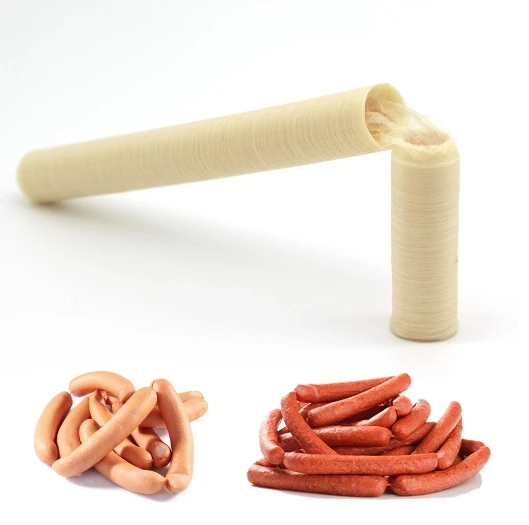
Collagen casings represent an innovative middle ground between natural and synthetic options, combining the benefits of both categories. These casings are manufactured from purified collagen proteins, typically sourced from bovine or porcine materials, and processed into consistent, high-quality casings. The collagen sausage casing offers excellent strength characteristics while maintaining the natural appearance and texture that consumers expect.
The manufacturing process for collagen casings allows for precise control over diameter, wall thickness, and permeability characteristics. This consistency translates to improved production efficiency and reduced waste during filling operations. Additionally, collagen casings can be formulated with specific properties such as enhanced smoke permeability or improved peeling characteristics for certain product applications.
Production Efficiency and Equipment Compatibility
Automated Filling System Requirements
Modern sausage production relies heavily on automated filling systems that require casings with specific performance characteristics. The casing material must possess sufficient strength to withstand the mechanical stresses of high-speed filling while maintaining consistent diameter throughout the process. Manufacturers should evaluate how different casing types perform with their specific equipment configurations.
Casing flexibility and elasticity directly impact filling speeds and product quality. Materials that are too rigid may crack during filling, while overly flexible casings can result in inconsistent product shapes. The ideal casing strikes a balance between strength and flexibility, allowing for smooth operation at optimal production speeds without compromising product integrity.
Preparation and Handling Considerations
Different casing types require varying levels of preparation before use, which directly impacts labor costs and production scheduling. Natural casings typically require soaking, cleaning, and careful handling to prevent damage. Synthetic casings may need specific conditioning procedures to achieve optimal performance characteristics.
Collagen casings generally require minimal preparation, often arriving ready-to-use or requiring only brief soaking periods. This convenience factor can significantly reduce labor costs and simplify production workflows. Manufacturers should calculate the total cost of ownership, including preparation time and potential waste, when comparing different casing options.
Quality Control and Consistency Standards
Dimensional Accuracy and Uniformity
Consistent casing dimensions are essential for maintaining product uniformity and meeting packaging requirements. Variations in diameter or wall thickness can result in uneven cooking, inconsistent appearance, and potential filling equipment problems. High-quality casings should meet strict tolerance specifications for diameter, length, and wall thickness.
Manufacturers should establish clear quality standards for incoming casing materials and implement inspection procedures to verify compliance. This includes measuring sample casings from each lot and documenting performance characteristics during production runs. Establishing relationships with suppliers who maintain rigorous quality control systems helps ensure consistent casing performance over time.
Strength and Durability Testing
Tensile strength testing provides valuable insights into casing performance under production conditions. Casings must withstand the pressures associated with filling, linking, and subsequent processing steps without rupturing or developing weak points. Regular testing of burst strength and elongation characteristics helps identify potential quality issues before they impact production.
Environmental factors such as temperature and humidity can significantly affect casing performance. Manufacturers should evaluate how different casing types perform under their specific production conditions, including any temperature variations during processing or storage. This evaluation helps ensure consistent performance regardless of seasonal variations or facility conditions.
Regulatory Compliance and Safety Requirements
Food Safety Certifications
All casing materials used in food production must comply with relevant food safety regulations and maintain appropriate certifications. This includes adherence to HACCP principles, FDA regulations, and any applicable international standards for export markets. Manufacturers should verify that their casing suppliers maintain current certifications and follow approved manufacturing processes.
Documentation requirements for casing materials include certificates of analysis, ingredient declarations, and allergen statements. These documents become critical during food safety audits and are necessary for maintaining regulatory compliance. Establishing clear documentation requirements with suppliers helps ensure all necessary information is available when needed.
Traceability and Lot Control
Effective traceability systems allow manufacturers to track casing lots through the production process and identify potential issues quickly if they arise. This capability becomes essential during product recalls or quality investigations. Casing suppliers should provide clear lot identification systems and maintain detailed records of manufacturing parameters for each batch.
Implementing robust lot control procedures helps manufacturers maintain product quality and respond effectively to any quality issues. This includes proper storage of casing materials, first-in-first-out rotation procedures, and clear labeling systems that facilitate tracking throughout the production process.
Cost Analysis and Economic Considerations
Total Cost of Ownership Evaluation
While initial casing costs represent an obvious expense, manufacturers should evaluate the total cost of ownership including preparation time, waste factors, and production efficiency impacts. Higher-quality casings may command premium prices but often provide better value through reduced waste, improved efficiency, and enhanced product quality.
Labor costs associated with casing preparation and handling can vary significantly between different casing types. Automated systems may favor certain casing characteristics that reduce manual intervention requirements. Manufacturers should quantify these indirect costs when comparing different casing options to make informed economic decisions.
Yield Optimization and Waste Reduction
Casing performance directly impacts product yields and waste generation during production. High-quality casings with consistent performance characteristics typically result in fewer processing problems and reduced waste. This improvement in yield can offset higher material costs and contribute to overall profitability.
Waste reduction strategies should consider both material waste and production downtime costs. Casings that perform reliably under production conditions help minimize equipment stoppages and reduce the labor costs associated with problem resolution. These factors contribute significantly to overall production economics and should be included in casing selection criteria.
FAQ
How do I determine the right casing diameter for my sausage products
Casing diameter selection depends on your target product size, filling equipment specifications, and consumer preferences. Most manufacturers use calibrated sizing rings or measuring tools to verify casing diameters match their requirements. Consider that casings may stretch during filling, so account for this expansion when selecting initial diameters. Consult with your equipment manufacturer and casing supplier to ensure compatibility between all system components.
What storage conditions are required for different casing types
Storage requirements vary significantly between casing types, with natural casings typically requiring refrigerated conditions and salt preservation. Collagen and synthetic casings often have more flexible storage requirements but still benefit from controlled temperature and humidity conditions. Always follow supplier recommendations for storage conditions and shelf life limits. Proper storage helps maintain casing performance characteristics and prevents quality deterioration over time.
Can I switch between different casing types on the same production line
Most modern filling equipment can accommodate different casing types with appropriate adjustments to filling parameters and equipment settings. However, you may need to modify filling pressures, speeds, or linking mechanisms when switching between casing types. Test different casings thoroughly on your equipment before implementing changes in full production. Consider the economic impact of changeover time and any equipment modifications required for different casing types.
How do I evaluate casing supplier reliability and quality consistency
Supplier evaluation should include assessment of quality control systems, certification maintenance, and delivery reliability. Request samples from multiple production lots to evaluate consistency over time. Review supplier audit reports, customer references, and quality certifications to verify their capability to meet your requirements. Establish clear quality specifications and testing protocols to monitor supplier performance on an ongoing basis.