 EN

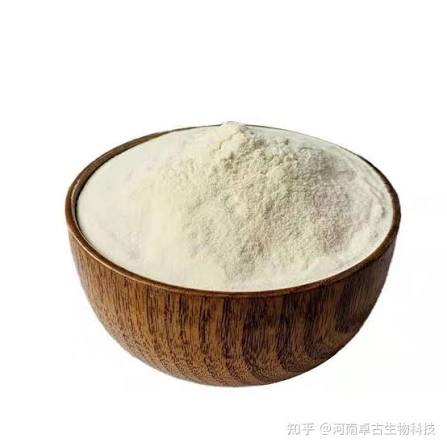
Viscosity control stands as one of the most critical challenges in modern food manufacturing, directly affecting product quality, consumer satisfaction, and operational efficiency. When food manufacturers struggle with inconsistent texture, separation, or flow properties, the result often leads to product waste, customer returns, and damaged brand reputation. Xanthan gum has emerged as the industry's preferred solution for achieving precise, reliable viscosity management across a wide range of food applications, from sauces and dressings to dairy products and beverages. Understanding how xanthan gum delivers this control requires insight into its molecular structure, functional properties, and practical implementation in modern production environments.
The science behind xanthan gum viscosity control involves complex polymer interactions that professional food technologists and production managers must grasp to optimize their formulations. Unlike simple thickeners that provide one-dimensional viscosity adjustment, xanthan gum delivers multifunctional benefits including shear-thinning behavior, temperature stability, and compatibility with diverse ingredient matrices. This comprehensive guide explores the mechanisms through which xanthan gum regulates viscosity, examines its application across different food categories, and provides actionable guidance for manufacturers seeking to enhance product performance and consistency.
Understanding Xanthan Gum Viscosity Mechanisms
Polymer Structure and Viscosity Generation
Xanthan gum achieves viscosity control through a distinctive polysaccharide chain structure produced by the bacterium Xanthomonas campestris. The molecular backbone contains five-sugar repeating units that create a rigid conformation in aqueous solutions, dramatically increasing fluid resistance and thickness. When xanthan gum particles disperse throughout a liquid medium, these extended polymer chains occupy significant space and create physical resistance to flow, effectively transforming thin liquids into stable, pourable gels. The concentration level directly determines viscosity output, allowing manufacturers to achieve precise control through careful dosage calculation and quality control protocols.
The unique branched structure of xanthan gum distinguishes it from conventional starch-based thickeners, providing superior consistency maintenance under demanding processing conditions. Even minimal concentrations of xanthan gum, typically ranging from 0.1 to 1.5 percent by weight, generate substantial viscosity improvements without creating the grainy texture or unpleasant mouthfeel associated with inferior thickening agents. This efficiency means manufacturers can achieve desired rheological properties while maintaining clean flavor profiles and optimal sensory characteristics that consumer research consistently demands.
Shear-Thinning Behavior and Processing Advantages
One of the most valuable properties of xanthan gum involves its shear-thinning characteristic, meaning the substance becomes thinner when subjected to mechanical stress or high-speed processing. During manufacturing, when xanthan gum-containing formulations pass through pumps, homogenizers, and filling equipment at high velocities, the polymer chains momentarily align and reduce their effective volume, allowing product to flow efficiently through narrow passages and injection nozzles. Once the shear stress subsides and the product settles into containers, xanthan gum molecules return to their expanded, disordered state, restoring full viscosity and preventing separation or settling during storage.
This shear-thinning behavior delivers enormous practical advantages for food manufacturers operating continuous production lines with demanding throughput requirements. Rather than struggling with thick, difficult-to-pump formulations that cause equipment stress and production bottlenecks, xanthan gum enables manufacturers to maintain convenient processing viscosity while delivering the thick, luxurious final product consumers expect. Processing efficiency improvements directly translate to reduced energy consumption, faster production cycles, and lower operational costs that enhance overall manufacturing profitability.
Xanthan Gum Performance Across Food Categories
Sauces, Dressings, and Condiment Applications
In the highly competitive sauces and dressings segment, xanthan gum serves as the essential stabilizer that maintains homogeneity and prevents the phase separation that ruins product appeal and consumer confidence. Vinaigrette dressings, particularly oil-based formulations, face inherent challenges as oil and water naturally resist mixing, causing visible separation within days of production unless proper emulsifying and thickening systems are implemented. Xanthan gum prevents this unwanted separation by increasing continuous phase viscosity and reducing particle settling rates, ensuring dressings maintain consistent appearance and texture throughout their shelf life.
Tomato-based sauces and ketchup products similarly depend on xanthan gum for achieving ideal pour characteristics and coating ability that influence consumer satisfaction and repeat purchases. When xanthan gum is properly incorporated at optimal concentrations, consumers experience perfectly balanced viscosity that allows sauce to coat food surfaces evenly while remaining pourable from bottles without excessive force. The consistency stability that xanthan gum provides prevents settling of tomato solids, maintains uniform color distribution, and eliminates the need for excessive salt or vinegar that might compromise flavor balance.
Dairy and Beverage Integration
Dairy manufacturers incorporate xanthan gum into yogurt drinks, smoothies, and flavored milk products to achieve creamy mouthfeel and prevent separation of fruit solids or flavorings that would otherwise settle to container bottoms. The minimal concentration of xanthan gum required for effective stabilization means dairy products maintain authentic milk flavor and clean taste profiles while achieving desired texture improvements that justify premium pricing. Temperature fluctuations during distribution and storage present particular challenges for dairy products, yet xanthan gum maintains consistent viscosity performance across typical refrigeration ranges that other thickeners cannot match.
In beverage applications from fruit juices to sports drinks, xanthan gum delivers subtle viscosity enhancement that improves drinking experience without creating perception of artificial thickness. The transparent nature of xanthan gum solutions means beverages maintain visual clarity and appealing color that matters enormously for consumer perception and shelf appeal. Compared to alternative stabilization methods, xanthan gum provides superior label-friendly positioning, as manufacturers can use minimal ingredients and avoid long chemical names that might trigger consumer skepticism.
Manufacturing Implementation and Quality Optimization
Formulation Strategy and Dosage Calibration
Successful xanthan gum implementation begins with precise dosage calculation based on desired final viscosity, ingredient compatibility, and processing equipment capabilities. Food technologists must conduct systematic viscosity testing across anticipated production conditions to establish optimal xanthan gum concentrations that balance texture improvements against processing feasibility. Typical dosing ranges vary significantly by application—thin dressings might require only 0.1 to 0.2 percent xanthan gum by weight, while thicker condiments or soup bases may benefit from 0.5 to 1.0 percent concentrations.
Hydration and dispersion quality dramatically influence how effectively xanthan gum performs in final products, requiring careful process control during incorporation phases. Inadequate hydration prevents xanthan gum particles from fully expanding to their molecular maximum, resulting in incomplete viscosity development and potential grittiness that consumers immediately detect and reject. Professional manufacturers typically employ dedicated hydration vessels with controlled water temperature, mixing intensity, and residence time to ensure xanthan gum reaches full functional potential before combining with other formula components.
Stability Testing and Shelf Life Assurance
Quality assurance protocols must include accelerated shelf-life testing that validates xanthan gum performance stability across anticipated storage conditions and timeframes. Products formulated with xanthan gum should undergo viscosity measurement at production, after one month storage, three months storage, and at end-of-shelf-life to confirm that texture remains consistent and separation does not develop. Temperature cycling tests, particularly for refrigerated products, reveal whether xanthan gum maintains effectiveness through repeated temperature fluctuations that products experience during distribution.
Microbiological stability matters as well, since certain bacteria or molds could theoretically degrade xanthan gum polymers and compromise viscosity maintenance if proper preservation systems are not implemented. Working with xanthan gum suppliers who provide rigorous documentation about product purity, microbial load, and chemical stability ensures manufacturers can formulate with confidence and avoid costly production failures.
FAQ
What concentration of xanthan gum is typical for food applications?
Typical xanthan gum concentrations range from 0.1 to 1.5 percent by weight depending on desired final viscosity and product category. Light dressings and beverages often use 0.1 to 0.3 percent, while thicker sauces and condiments may require 0.5 to 1.0 percent for optimal texture and stability throughout shelf life.
Does xanthan gum affect food flavor or cause off-tastes?
High-quality xanthan gum is essentially flavorless and colorless when properly hydrated and incorporated into food formulations, making it an ideal stabilizer that does not compromise authentic product taste or visual appearance that consumers expect from premium foods.
How does temperature affect xanthan gum viscosity performance?
Unlike some alternative thickeners, xanthan gum maintains consistent viscosity across wide temperature ranges from refrigeration through moderate heating, providing reliable stability for products subjected to normal storage and distribution temperature fluctuations throughout their commercial shelf life.